Discover how the AI in gaming industry is transforming game design, player experiences, and the future of immersive virtual worlds.
Introduction to AI in Gaming Industry
The AI in gaming industry is evolving rapidly, shifting how games are created, played, and experienced. Artificial Intelligence is no longer just a background tool—it’s now a central character that enhances player immersion, adapts gameplay in real time, and even predicts user behavior. With smarter NPCs, dynamic environments, and personalized experiences, AI is revolutionizing game development and reshaping the future of digital entertainment.
The Evolution of AI in the Gaming World
Early Use of AI in Classic Games
In the early days, AI in games like Pac-Man or Space Invaders was basic, rule-based, and predictable. These early systems relied on simple patterns or scripts that offered minimal variation in gameplay.
Milestones in AI Development for Gaming
As technology advanced, so did the complexity of in-game AI. Notable milestones include the pathfinding systems in Warcraft III, emotional AI in F.E.A.R., and behavior trees in Halo. These developments paved the way for modern AI frameworks that can adapt and learn from player interactions.
Core Technologies Behind AI in Gaming
Machine Learning and Deep Learning
Modern games leverage machine learning to analyze and adapt to player behavior. Deep learning networks can create complex patterns and reactions, making characters smarter and more believable.
Natural Language Processing (NLP)
Thanks to NLP, players can interact with characters in natural language, as seen in AI-driven chatbots and RPGs with dynamic dialogue systems.
Procedural Content Generation (PCG)
PCG uses AI to generate levels, maps, quests, and storylines on the fly. This ensures a unique experience every time a game is played, as seen in No Man’s Sky.
Applications of AI in Modern Gaming
Smart NPCs (Non-Playable Characters)
AI enhances NPC intelligence, enabling them to react realistically to player actions. In games like Red Dead Redemption 2, NPCs display emotions, routines, and unexpected reactions.
Dynamic Game Environments
AI can manipulate in-game weather, missions, or enemies in real-time, adjusting the challenge based on how players perform, as seen in Left 4 Dead’s AI Director.
Real-Time Decision Making
AI algorithms can analyze millions of data points per second, allowing enemies or allies to respond instantly and strategically, just like a human opponent would.
Impact of AI on Game Design and Development
Personalized Gaming Experiences
By learning player preferences, AI tailors difficulty, narrative choices, and gameplay mechanics to suit each individual.
Game Testing and Bug Detection
AI bots now help developers simulate thousands of gameplay scenarios, identifying bugs and glitches faster than human testers.
Adaptive Difficulty Levels
Adaptive AI monitors player skills and adjusts the challenge in real-time, creating a more balanced and enjoyable gaming experience.
AI and Player Behavior Prediction
User Profiling and Gameplay Analytics
AI can build detailed user profiles to understand what players enjoy most. This insight helps developers fine-tune experiences and predict in-game decisions.
Enhancing Retention and Engagement
By adapting content to a player’s style, AI keeps gamers hooked longer, leading to improved engagement and higher player retention.
AI in Esports and Competitive Gaming
Training Bots for Practice
In the esports arena, AI-powered bots are used to simulate real opponents. These bots can mimic high-level human strategies, offering professional players a competitive training ground. Games like Dota 2 have introduced AI opponents from systems like OpenAI’s Five, which defeated world champions, showcasing the strength of AI in competitive play.
Anti-Cheat Mechanisms
AI also plays a vital role in maintaining fairness. It continuously monitors gameplay to detect anomalies or unusual behavior patterns, automatically flagging cheaters. With real-time analysis, games can ban offenders and ensure a clean, competitive environment.
Challenges of Using AI in Gaming
Ethical Concerns and Data Privacy
AI systems require vast amounts of data. This raises concerns about user privacy, consent, and how game companies handle sensitive information. Developers must balance innovation with transparency and respect for user rights.
Balancing Realism and Fun
Too much realism, especially from highly reactive AI, can frustrate players. The challenge lies in maintaining a balance—providing immersive AI without sacrificing playability or enjoyment.
AI in VR, AR, and Metaverse Gaming
Immersive AI-Powered Interactions
With Virtual and Augmented Reality on the rise, AI enables lifelike NPCs that can respond to gestures, voice, and eye movements. These interactions make players feel part of a living, breathing virtual world.
Creating Intelligent Virtual Worlds
AI algorithms can generate expansive, interactive landscapes and populate them with autonomous characters. These intelligent ecosystems are crucial to building metaverse-style games that evolve independently of the user.
Future Trends: What’s Next for AI in Gaming Industry?
AI-Generated Games
Soon, AI could independently design levels, story arcs, and game mechanics based on trends and player feedback. Tools like ChatGPT and Codex already assist developers in automating tasks like dialogue generation or coding logic.
Fully Autonomous Game Design
The ultimate frontier? Entire games created and maintained by AI. These games could evolve over time, react to player sentiment, and offer endless replayability.
Top AI Tools and Engines Used in Game Development
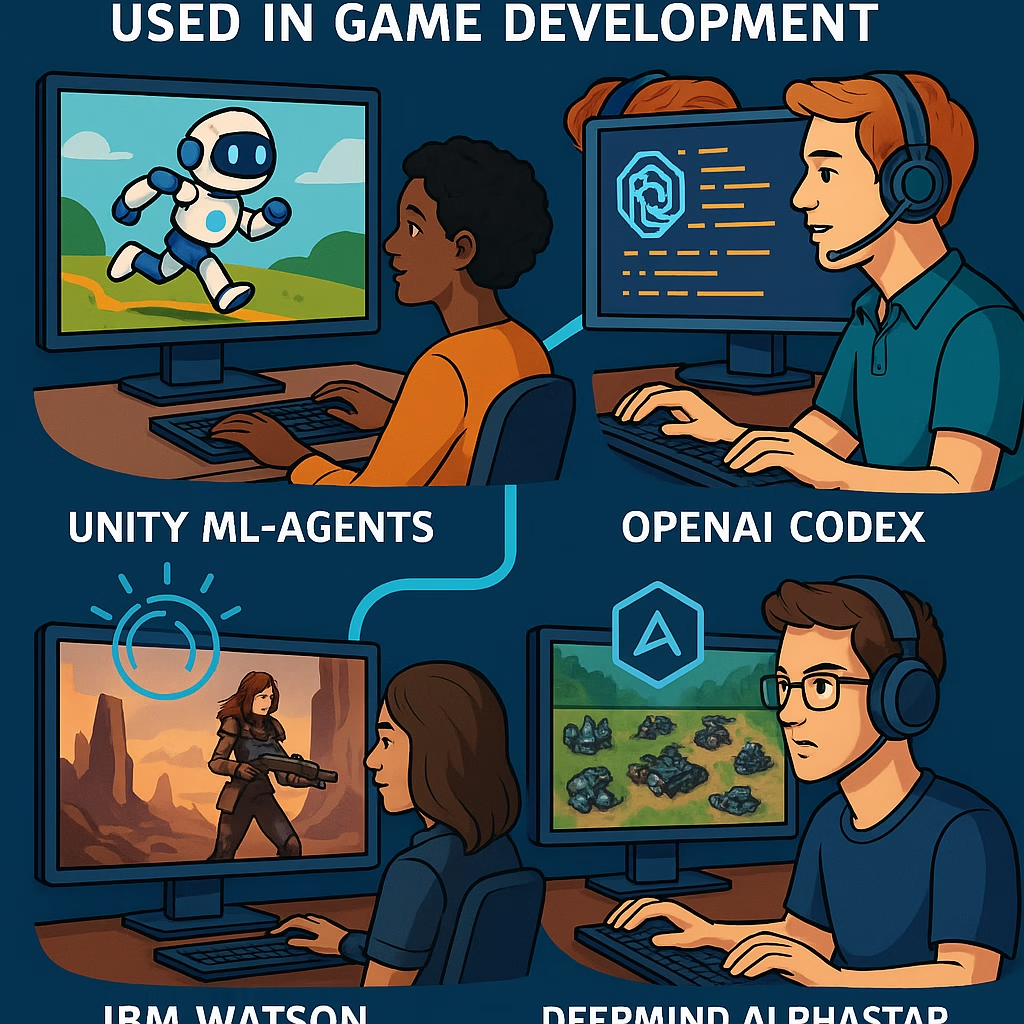
| Tool/Engine | Functionality |
|---|---|
| Unity ML-Agents | Reinforcement learning environment for Unity games |
| OpenAI Codex | AI code generator for game logic and NPC behavior |
| IBM Watson | NLP and AI assistance in immersive narratives |
| DeepMind AlphaStar | Competitive AI for RTS games like StarCraft II |
| TensorFlow / PyTorch | Core libraries for ML/AI models in gaming |
Case Studies: Real-World Examples of AI in Gaming
AI in The Last of Us Part II
This game is praised for its incredibly intelligent NPCs. Enemies coordinate, call out player positions, and react to changing environments, offering a realistic and challenging experience.
Deep Learning in Alien: Isolation
Using a two-tiered AI system, the alien creature learns from player behavior. It reacts unpredictably, creating terrifying suspense and replayability, making it a standout example of AI in horror games.
Frequently Asked Questions (FAQs)
1. How is AI currently used in the gaming industry?
AI is used to enhance NPC behavior, create adaptive difficulty, generate content, predict player actions, and test games.
2. Will AI replace game developers?
Not entirely. AI supports and augments developers by automating tasks but still requires human creativity for storytelling, art, and emotional design.
3. Can AI improve player engagement?
Yes, through personalization, adaptive challenges, and dynamic content that caters to each player’s style.
4. Are AI-powered games more difficult?
They can be—but adaptive AI ensures the game adjusts to your skill level for a balanced experience.
5. Is player data safe in AI-powered games?
It depends on the game’s privacy policies. Always read the terms and ensure the game uses encrypted, ethical data practices.
6. Which companies are leading in AI game development?
Studios like Naughty Dog, Valve, and Ubisoft are actively investing in AI. Tech companies like OpenAI, Unity, and Google DeepMind also play a major role.
Conclusion: Embracing the Future of AI in Gaming
The AI in gaming industry is more than a trend—it’s a fundamental shift in how we create, interact with, and experience digital worlds. From immersive NPCs and procedural content to esports and ethical considerations, AI is shaping the games of tomorrow.
As technology evolves, we can expect AI to unlock infinite creativity, make gaming more inclusive, and deliver experiences that feel alive. Embracing this transformation means stepping into a future where players and AI collaborate in worlds limited only by imagination.