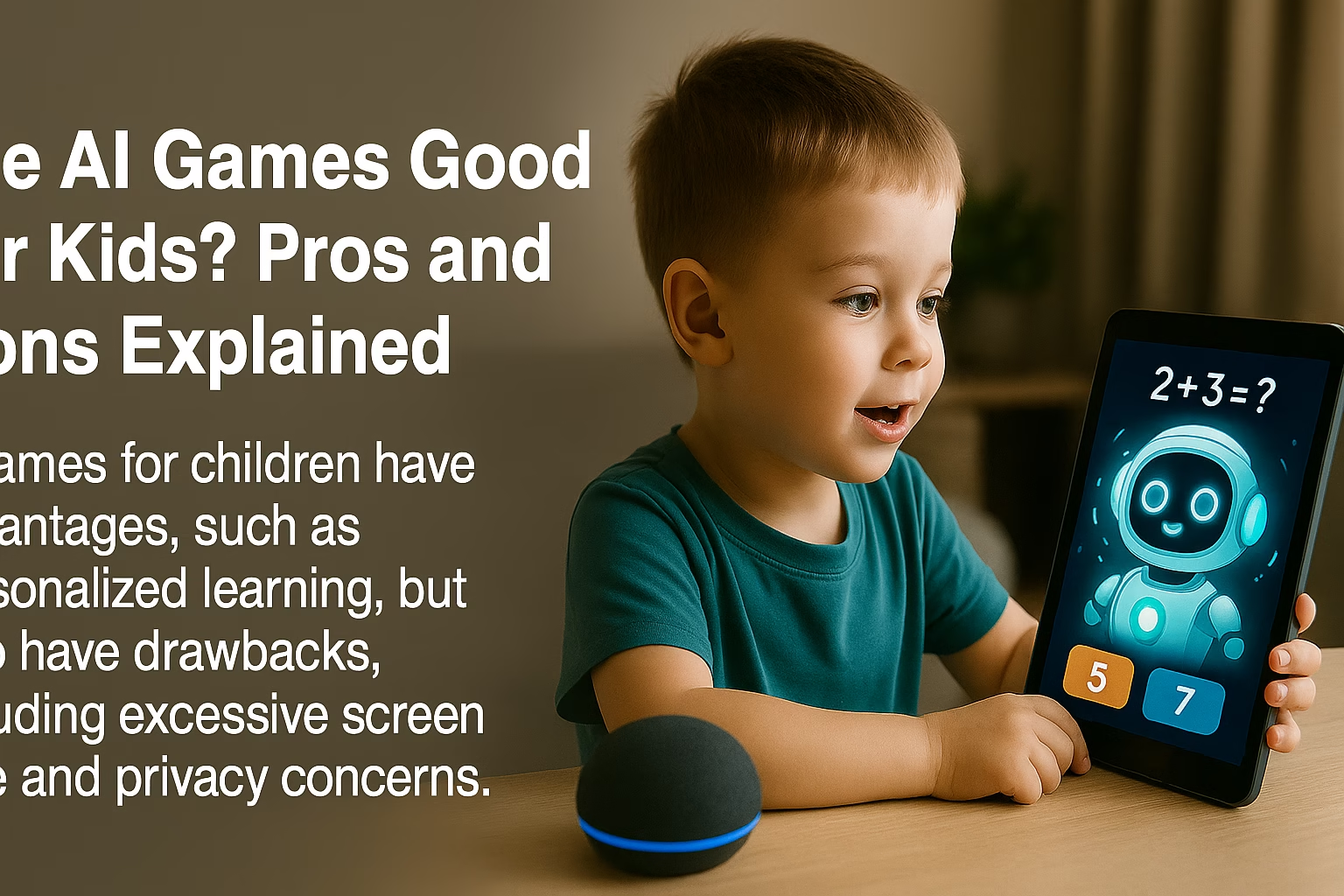
Introduction to AI Games for Children
In today’s fast-moving digital world, children are growing up surrounded by intelligent technologies—and AI games for children are one of the most talked-about trends. From learning math with talking robots to exploring new worlds with adaptive characters, AI is transforming the way kids play and learn.
But is this a good thing? As with anything new, AI-powered games come with both bright opportunities and potential pitfalls. In this post, we’ll explore the real pros and cons of AI games for kids so parents, teachers, and guardians can make informed decisions.
How Do AI Games Work for Kids?
AI games use artificial intelligence algorithms to learn from a child’s interactions, behaviors, and performance. This means the game adjusts itself—changing difficulty levels, offering tailored hints, and responding in a way that feels personalized.
Key Features of AI-Based Games for Kids
-
Personalized learning paths: Adapts to the child’s skill level.
-
Voice and facial recognition: Allows interactive, hands-free control.
-
Natural language processing (NLP): Lets kids “talk” to the game.
-
Data-driven progress tracking: Provides insights for parents and teachers.
These features make AI games more immersive and potentially more effective than traditional games.
Benefits of AI Games for Children
1. Enhances Critical Thinking and Problem-Solving
Many AI games are designed with challenges that require logic, decision-making, and strategy. These help sharpen a child’s mental flexibility and problem-solving skills, making learning fun and engaging.
2. Personalized Learning Experiences
Unlike one-size-fits-all games, AI titles adjust to a child’s individual learning curve. This means less frustration and more tailored feedback, allowing every child to thrive at their own pace.
3. Encourages Creativity and Exploration
AI-powered sandbox games let children explore, build, and create without strict rules. These games spark imagination and encourage kids to test ideas, invent solutions, and even learn basic coding concepts.
4. Builds Tech Awareness from an Early Age
Playing AI games gives kids early exposure to intelligent systems, helping them become more comfortable with technology—an essential skill for the future job market.
Potential Risks of AI Games for Children
1. Screen Time Overload and Addiction Risks
Too much screen time is linked to reduced physical activity and sleep disturbances. The intelligent, responsive nature of AI games can make them more addictive, increasing the risk of obsessive play.
2. Privacy and Data Concerns
Many AI games collect data to improve personalization. However, without strong privacy protections, sensitive information like voice data, play habits, or location could be mishandled or even leaked.
3. Reduced Human Interaction and Social Skills
When kids spend long hours in AI-driven worlds, they might miss opportunities for real-life social interactions. This could affect their ability to build empathy, communication skills, and emotional intelligence.
Expert Opinions on AI Games in Childhood Development
Leading child development experts agree that AI games for children can be beneficial when used in moderation and with purpose. According to the American Academy of Pediatrics, tech should support—not replace—real-world learning and human interaction. Educators also highlight that well-designed AI games can reinforce classroom learning when chosen wisely.
How to Choose the Right AI Games for Kids
Look for Educational Value and Age Appropriateness
Opt for games that are not just fun but also educational, aligned with your child’s grade level. Look for awards, ratings, and reviews from other parents and educators.
Avoid Games with Excessive Ads or In-App Purchases
AI games with too many ads or monetization tactics can disrupt learning and create unsafe environments. Choose ad-free or parent-approved titles.
Tips for Parents to Guide Healthy Gaming Habits
-
Set time limits for screen use using built-in parental controls.
-
Play with your kids occasionally to understand the game and promote bonding.
-
Talk about the game—ask what they learned, found fun, or challenging.
-
Use a tech schedule to balance gaming with homework, play, and rest.
Frequently Asked Questions about AI Games for Children
1. Are AI games safe for young children?
Yes, if you choose age-appropriate games from trusted sources. Always review content and privacy settings.
2. Can AI games replace traditional education?
No. They can support learning but shouldn’t replace human instruction or classroom interaction.
3. Do AI games improve learning outcomes?
Studies suggest AI games can improve engagement and retention, but effectiveness depends on content quality.
4. Are there any free AI games for kids?
Yes, several high-quality AI games are free or freemium, including Khan Academy Kids and LightBot.
5. How do I monitor what my child is playing?
Use parental control tools, check the game’s dashboard, and communicate regularly with your child.
6. Do AI games promote violence or aggression?
Not inherently. Choose non-violent, educational AI games. Avoid games with mature or aggressive content.
Conclusion: Balancing the Benefits and Drawbacks
AI games for children are an exciting innovation that blend fun and learning in powerful ways. When chosen wisely and used in moderation, they can foster creativity, boost problem-solving, and provide personalized learning experiences. But they also carry real concerns—from data privacy to screen time addiction—that every parent should consider.
The key? Balance, supervision, and smart choices. Embrace the benefits while staying alert to the risks, and you’ll help your child thrive in a world where AI is part of everyday life.