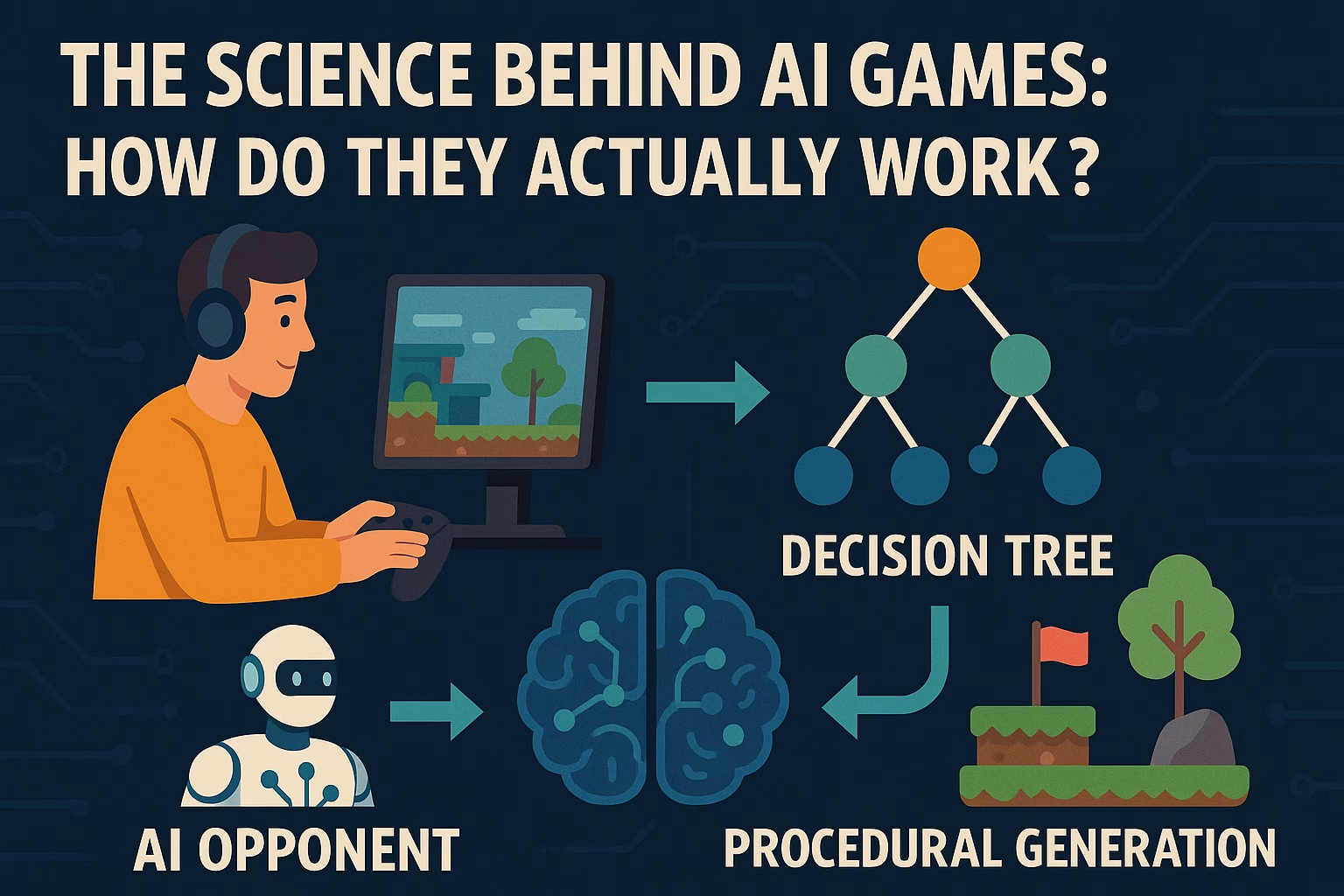
Discover the fascinating world of game development and explore how AI works in games—from decision-making to procedural storytelling. Learn how this tech is changing the future of gaming!
Introduction to Game AI
Artificial Intelligence (AI) in gaming is not just a sci-fi concept—it’s the very heart of many modern game experiences. From the predictable ghosts in Pac-Man to the complex behavior of enemies in The Last of Us, game AI has evolved tremendously. But how AI works in games isn’t always obvious. It’s not about creating real intelligence, but about crafting the illusion of life through clever programming and data science.
Game AI began as simple rule-based behavior and has transformed into a sophisticated system capable of adapting, learning, and even generating new content dynamically. Today, AI contributes to realism, immersion, and player engagement like never before.
Core Principles of AI in Games
Decision Trees
Decision trees allow game characters to choose between actions based on predefined conditions. For example, if a player is nearby, the enemy might attack; if not, it might patrol.
Finite State Machines (FSM)
FSMs model AI behavior by defining specific states like “Idle,” “Attack,” or “Flee,” and transitions between them. This structure is still widely used in strategy and action games.
Pathfinding Algorithms
One of the most important areas in AI is navigation. Algorithms like A* (A-star) help characters find the shortest or most efficient route from one point to another without walking into walls or off cliffs.
Machine Learning in Modern Games
Reinforcement Learning
Games like AlphaGo and Dota 2 use reinforcement learning, where AI agents learn optimal strategies through trial and error. Over time, they improve based on the rewards received for their actions.
Neural Networks and Deep Learning
AI models can now recognize patterns in player behavior. Neural networks help in tasks like speech recognition, enemy strategy planning, and even creating personalized in-game challenges.
Procedural Generation and AI Creativity
AI doesn’t just control behavior—it can also create. Procedural generation uses algorithms to produce game environments, quests, and items on the fly.
Games like Minecraft, Spelunky, and No Man’s Sky rely on this approach to offer near-infinite variety. AI also contributes to procedural storytelling, adjusting narratives based on player decisions.
Behavior Trees and Real-Time Decision Making
Unlike FSMs, behavior trees are more flexible and scalable. They allow for layered, complex decisions—making characters act in more natural, believable ways.
Real-time decision-making means NPCs (non-player characters) can change their actions dynamically, reacting to what the player does instantly.
NPC Intelligence: Making Characters Feel Real
Dialogue Systems
Dialogue trees and AI-based response systems create realistic conversations. Some RPGs now use AI to simulate emotions, sarcasm, or urgency in speech.
Emotion Simulation
Games like The Sims simulate human emotions using AI to make characters act differently based on their mood.
AI Companions
Think of Ellie from The Last of Us. Her behavior adapts to the player’s strategy, hiding when needed, offering ammo, or even helping during fights.
AI Opponents vs. Human Players
To keep players engaged, AI needs to offer a fair challenge.
Adaptive Difficulty
Some games track player performance and adjust AI difficulty in real-time. If a player is winning easily, enemies get tougher—keeping the thrill alive.
Learning from Player Behavior
Advanced AI can recognize patterns. For example, if you always sneak from the left, AI might place traps or guards there next time.
AI in Game Design and Testing
AI isn’t just for gameplay—it helps in building the game itself.
Automated Bug Detection
Developers use AI bots to test various gameplay scenarios, revealing bugs that would be missed by human testers.
Gameplay Balancing
Simulations run by AI help balance weapons, abilities, and mechanics to avoid overpowered strategies.
Challenges in Implementing Game AI
Despite the progress, building good AI is hard.
-
Limited Processing Power: AI routines must run alongside graphics, sound, and physics engines.
-
Unpredictable Behavior: A small AI bug can lead to hilarious—or game-breaking—glitches.
Ethical Considerations of Game AI
As AI gets smarter, so do the concerns.
-
Manipulative Mechanics: Some games use AI to encourage in-game purchases.
-
Privacy Issues: Multiplayer games may collect behavioral data, raising concerns over user consent.
Real-World Examples of Game AI
-
F.E.A.R. features enemies that use cover and flanking.
-
The Last of Us Part II has AI teammates and enemies that work together intelligently.
-
No Man’s Sky uses procedural AI to create planets, wildlife, and more.
The Role of AI in Multiplayer Games
-
Bots: Fill empty slots or offer training for new players.
-
Matchmaking Systems: Use AI to pair players of similar skill levels.
-
Anti-Cheat Measures: AI helps detect unusual gameplay patterns to catch cheaters.
The Future of AI in Gaming
-
AI-Driven Stories: Imagine games that tell different stories based on how you play.
-
Personalized Gaming: AI could tailor entire game mechanics to suit your preferences.
Comparing Game AI with General AI
Game AI is narrow—designed for specific tasks. Unlike general AI (like ChatGPT), it doesn’t learn beyond its intended scope. But within its world, it can feel incredibly smart.
Tools and Languages Used to Build Game AI
Popular tools include:
| Tool/Language | Use |
|---|---|
| Python | Prototyping AI logic |
| C++ | High-performance AI systems |
| Unity ML-Agents | Training game bots using ML |
| Unreal Engine | Built-in behavior trees and pathfinding |
FAQs on How AI Works in Games
Q1: Is game AI actually intelligent?
A: Not in the human sense. It’s smart within the limits of the game world and programmed scenarios.
Q2: Can AI learn from players in real-time?
A: Yes, some advanced systems track and adapt to player actions dynamically.
Q3: What’s the difference between scripted and dynamic AI?
A: Scripted AI follows pre-written rules, while dynamic AI adjusts its behavior based on context.
Q4: How does AI affect game difficulty?
A: It can increase or decrease challenge based on player performance, keeping things balanced.
Q5: Can AI cheat in games?
A: In some cases, yes—especially in older games where AI is given unfair advantages.
Q6: Are there risks to using AI in games?
A: Yes, including overreliance on manipulation, privacy issues, and lack of transparency.
Conclusion: How AI is Shaping the Future of Gaming
The question of how AI works in games is as thrilling as the games themselves. From creating lifelike enemies to crafting entire worlds, AI is not just a background tool—it’s the co-director of your gaming experience.
As technology advances, the line between player and simulation will blur, promising richer, more personalized adventures.