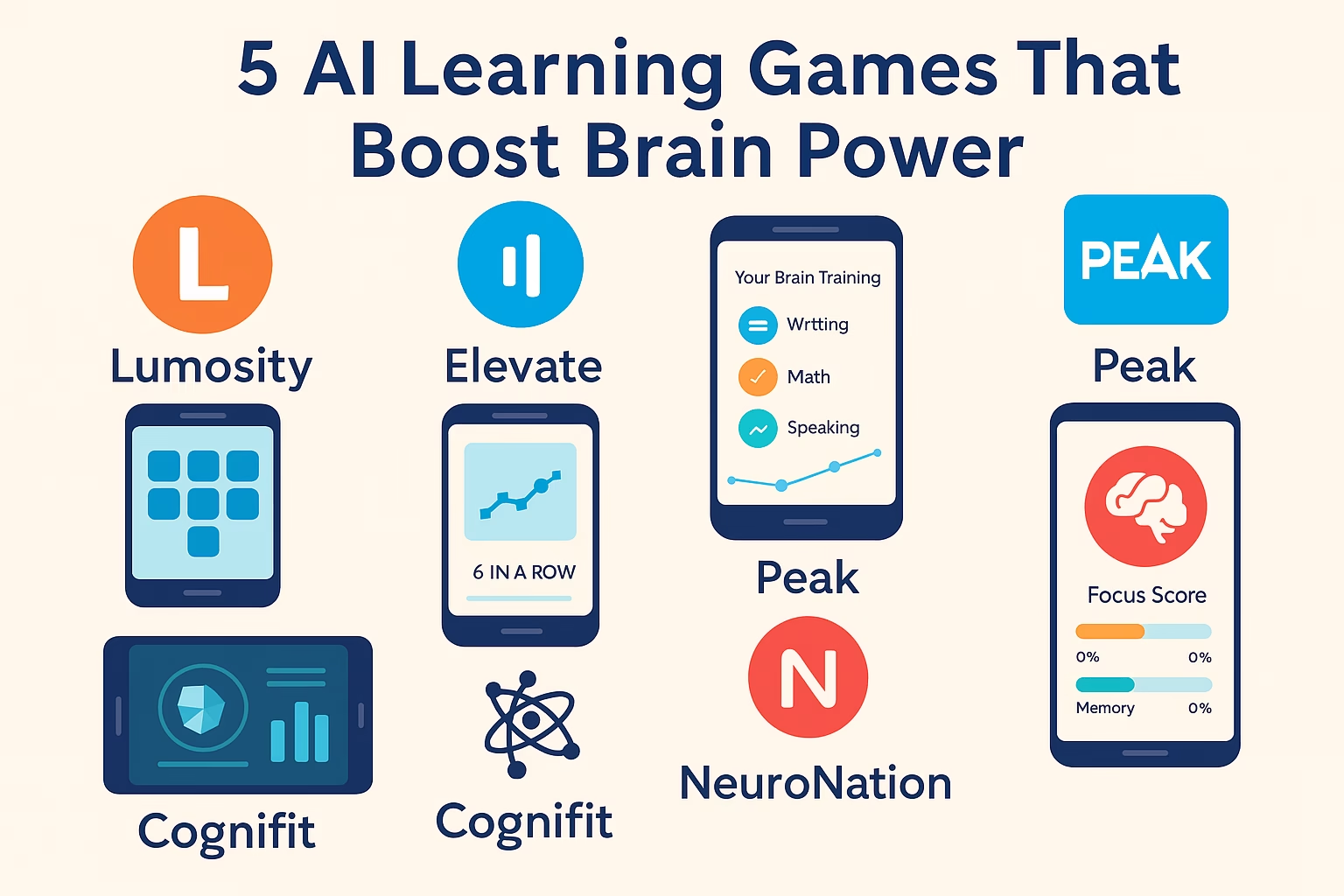
In today’s fast-paced digital world, keeping your brain sharp is more important than ever. That’s where AI brain training games come in. These powerful, interactive tools use artificial intelligence to personalize your learning experience, track your progress, and improve everything from memory to focus.
But with hundreds of apps out there, which ones truly make a difference? In this blog, we’ll explore five standout AI learning games that boost brain power—and dive into how they work, who they help, and why they’re so effective.
Introduction to AI Brain Training Games
What Are AI Brain Training Games?
AI brain training games are digital tools designed to enhance cognitive skills such as memory, attention, problem-solving, and flexibility. Unlike traditional games, these apps adapt in real-time using artificial intelligence to suit your skill level and learning speed.
Benefits of Using AI for Cognitive Enhancement
-
Personalized feedback: AI adjusts difficulty and content based on your performance.
-
Engaging experience: Game mechanics stimulate motivation and consistency.
-
Cognitive diversity: Target multiple brain functions simultaneously.
-
Progress tracking: AI compiles data to help monitor improvements over time.
How AI Is Revolutionizing Brain Development
Real-Time Personalization
AI algorithms analyze user data such as reaction time, accuracy, and session duration to adapt the difficulty and style of challenges. This makes learning more effective and tailored to individual strengths and weaknesses.
Data-Driven Feedback Loops
With each session, AI gathers performance metrics and builds a cognitive profile, enabling it to offer precise feedback. This iterative loop ensures you’re always playing at the optimal challenge level.
Game #1 – Lumosity: Personalized Brain Workouts
Key Features
Lumosity offers over 50 games designed in collaboration with neuroscientists. These span five core areas: memory, speed, attention, problem-solving, and flexibility.
AI-Powered Game Mechanics
Each game tracks your progress and adapts in real time. For instance, the memory games start with simple patterns and gradually grow complex based on your accuracy.
Who It’s Best For
Lumosity is ideal for anyone from students to professionals looking to maintain cognitive sharpness.
Game #2 – Elevate: Daily Mental Skills Boost
How It Works
Elevate targets practical skills like reading comprehension, writing, math, and more. It uses a daily workout format, which includes 3–5 personalized games.
AI Algorithms in Action
The AI learns your weaknesses and adjusts game difficulty and type to maximize your growth rate over time.
User Experience Insights
Elevate has a sleek, user-friendly interface. Many users report noticeable improvement in their communication and math skills within a few weeks.
Game #3 – Peak: Scientific Brain Training
Cognitive Areas Targeted
Peak’s games are rooted in cognitive science and challenge areas such as mental agility, language, coordination, and creativity.
AI Personal Trainer Mode
Peak’s AI “Coach” recommends daily challenges, sets goals, and adjusts the difficulty based on your prior scores and patterns.
Game #4 – Cognifit: Brain Health Tracking
Clinical Validation & AI Scoring
Cognifit collaborates with medical institutions and offers clinically-validated tasks. Its AI evaluates more than 20 cognitive skills and provides detailed progress reports.
Adaptability Based on User Progress
AI analyzes your results after every session and tailors your next training path. It’s especially useful for older adults or individuals recovering from brain injuries.
Game #5 – NeuroNation: Focus & Memory Builder
Customization Powered by AI
NeuroNation customizes training paths based on initial assessments. The more you play, the more refined the cognitive map becomes.
Success Stories
The app is widely praised in Europe, especially in Germany, where it’s endorsed by health insurers for its therapeutic value in fighting mental decline.
📊 Comparing the Top 5 AI Brain Training Games
| Feature | Lumosity | Elevate | Peak | Cognifit | NeuroNation |
|---|---|---|---|---|---|
| Personalized AI? | ✅ | ✅ | ✅ | ✅ | ✅ |
| Clinical Studies | ✅ | ❌ | ✅ | ✅ | ✅ |
| Free Version? | ✅ | ✅ | ✅ | ✅ | ✅ |
| Best For | General Users | Professionals | Gamers | Seniors | Focus Seekers |
Who Should Use These Games?
Students
To improve focus, comprehension, and test performance.
Professionals
To stay sharp in critical thinking and multitasking under pressure.
Seniors
To slow cognitive decline and stay mentally active.
How Often Should You Play AI Brain Training Games?
Recommended Usage Patterns
Experts suggest 15–20 minutes a day, 4–5 times a week for maximum benefit.
What Neuroscience Suggests
Consistent stimulation of neural pathways helps maintain cognitive elasticity—key to lifelong learning and adaptability.
Do AI Games Really Work?
Scientific Studies
Numerous studies, including those from Stanford and Cambridge, have shown moderate to significant cognitive improvements with regular use of AI brain training games.
User Testimonials
Many users claim better memory recall, sharper attention, and enhanced mood within weeks.
Common Myths About Brain Training Games
Debunking “Brain Games Are Useless”
While some low-quality games offer little value, the top AI brain training games are backed by science and produce measurable results.
The AI Advantage
AI customizes the learning path—something static paper-based puzzles or traditional games can’t offer.
Choosing the Right Game for Your Goals
Goal-Based Selection
-
Want better memory? Try Lumosity or NeuroNation.
-
Need sharper focus and logic? Go for Peak or Cognifit.
-
Improving everyday skills like writing and math? Elevate is ideal.
What to Avoid in Low-Quality Apps
Avoid apps with repetitive tasks, lack of personalization, or no scientific backing.
Tips to Maximize Results With AI Brain Games
Creating a Routine
Set a consistent daily time—like just after breakfast or before bed.
Combining With Other Learning Tools
Pair with reading, puzzles, or language apps for a well-rounded brain workout.
FAQs About AI Brain Training Games
1. Are AI brain games safe for kids?
Yes, many offer child-friendly versions with age-appropriate content.
2. Can AI games replace formal education?
No, but they are excellent supplements for cognitive reinforcement.
3. How long before I see results?
Usually within 2–4 weeks of regular use.
4. Are results permanent?
Only with continued use. Like physical exercise, cognitive gains need maintenance.
5. Do these games work offline?
Some do, but AI-driven features often require an internet connection.
6. Are there any free options?
Yes! Most apps offer basic versions for free with optional upgrades.
Final Thoughts on AI Brain Training Games
AI brain training games are more than just a trend—they’re a practical, enjoyable, and scientifically supported way to keep your brain sharp. With real-time feedback, adaptive difficulty, and engaging challenges, these games are changing how we think about mental fitness.
Whether you’re a student, a busy professional, or a senior aiming to stay mentally agile, the right AI game can become your brain’s best workout partner.
🔗 External Resource: For further reading on cognitive health, check out the American Psychological Association’s guide to brain training.
AI-Generated Images Incoming…
Now generating 4 custom AI images to enhance your blog article:
-
A visual collage of the top 5 brain training apps
-
An illustration of AI algorithms analyzing brain activity
-
A senior and student using AI games on tablets
-
A brain glowing with neural pathways lighting up during gameplay